

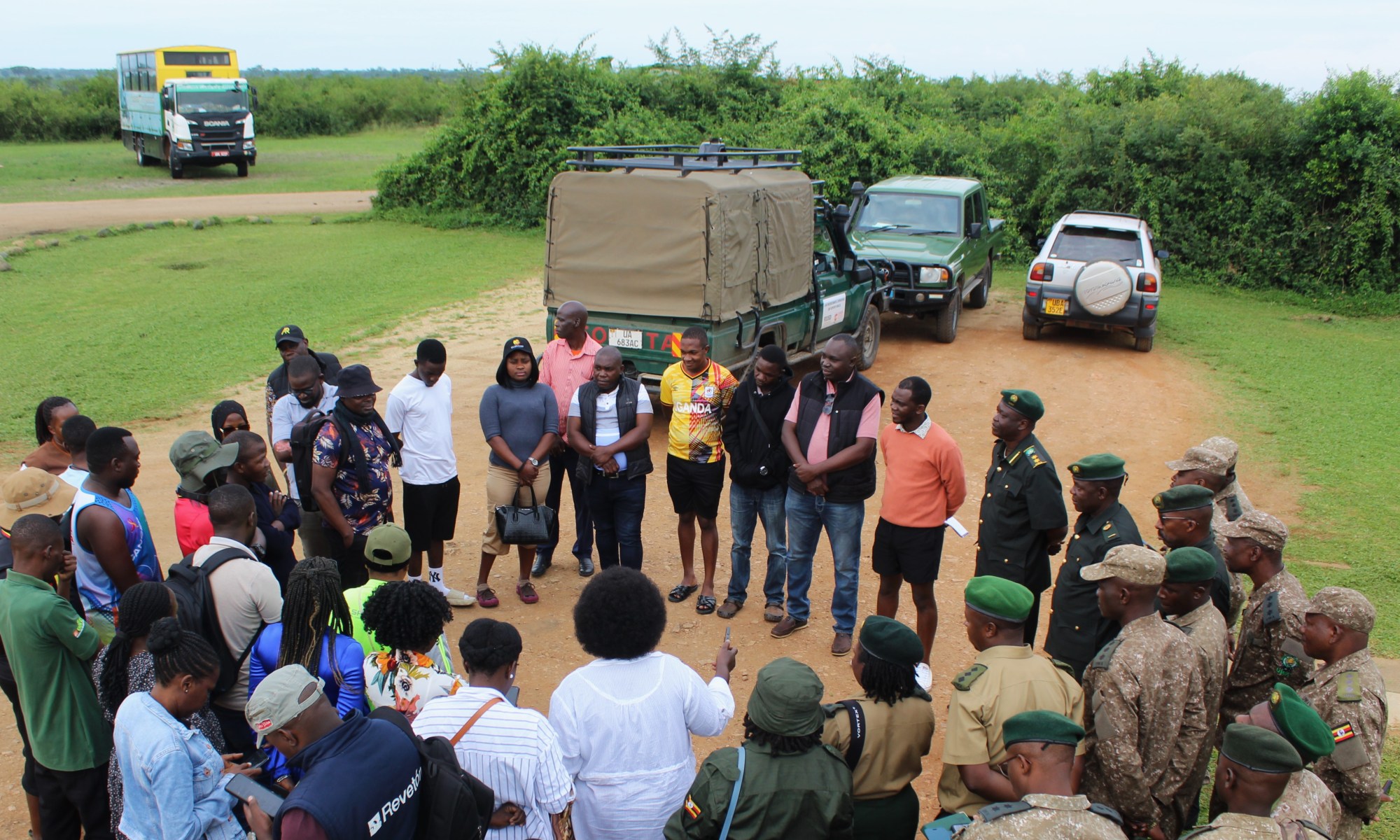
Over the weekend, the Uganda Parliamentary Press Association (UPPA) was hosted by the Uganda Wildlife Authority (UWA) at the Queen Elizabeth Conservation Area for a three-day educational tour.
The group of journalists, representing both print and electronic media, were introduced to UWA’s comprehensive conservation strategy, which includes habitat protection, wildlife monitoring, mitigating human–wildlife conflicts, and fostering community partnerships.
During the tour, UWA showcased its efforts to ensure wildlife protection and promote coexistence with local communities. These efforts include; installing electric fences around vulnerable areas to prevent wildlife intrusion and enhance community safety, employing and deploying community wildlife scouts, conducting conservation education campaigns to raise awareness among communities, schools, and local stakeholders about living harmoniously with wildlife, and using digital tools such as the Earth Ranger system and satellite collars to monitor wildlife throughout the conservation area.

The collaboration between UPPA and UWA supports the Authority’s mission to work with partners in conserving and managing the country’s protected areas.
The engagement also helps foster a positive and well-informed portrayal of conservation in the media, leading to more accurate and credible reporting on wildlife, sustainable tourism, and development.
The gorilla experience is one of the most powerful and intimate wildlife encounters available anywhere in the world, centered in the mountain forests of East and Central Africa, particularly in Bwindi Impenetrable National Park and Mgahinga Gorilla National Park in Uganda. Unlike traditional game drives, the gorilla experience is immersive, physical, and deeply emotional, requiring visitors to enter the rainforest on foot and meet a habituated gorilla family in its natural habitat. This direct yet regulated encounter creates a rare connection between humans and one of their closest biological relatives.
What defines the gorilla experience is not only the sighting itself but the entire journey into the forest ecosystem, including ranger briefings, guided trekking, wildlife interpretation, and strict conservation protocols. Every stage is designed to protect gorillas while allowing visitors to observe authentic social behavior such as feeding, grooming, resting, and play. The result is a conservation-centered adventure that blends ecology, culture, and personal transformation.
Thank you for highlighting this so clearly. The gorilla experience is powerful precisely because it is built on respect and regulation. Visitors are allowed a rare closeness, yet every aspect of the trek—from ranger briefings to time limits and distance rules—reinforces that conservation comes first.
What stands out is how this approach connects emotional impact with real conservation outcomes. Gorilla trekking in Uganda demonstrates that well-managed tourism can protect wildlife, sustain habitats, and generate tangible benefits for surrounding communities, making the experience meaningful well beyond the moment of the encounter.
Habitat diversity is the defining ecological strength of Queen Elizabeth National Park, with multiple ecosystem types existing within a single protected area. The park includes savannah grassland, acacia woodland, riverine forest, papyrus wetlands, crater lakes, and bushland. Each habitat supports distinct wildlife communities and seasonal movement patterns.
This engagement with the Uganda Parliamentary Press Association is a valuable step toward strengthening informed conservation dialogue in Uganda. By exposing journalists to both the challenges and practical solutions within the Queen Elizabeth Conservation Area, UWA reinforces the importance of transparency and evidence-based conservation reporting.
The emphasis on community coexistence, technology-driven wildlife monitoring, and on-the-ground interventions such as electric fencing and community wildlife scouts highlights how conservation today must balance ecological protection with human livelihoods. Such initiatives not only safeguard wildlife but also build local trust and long-term support for protected areas.
Partnerships like this play a critical role in ensuring that conservation narratives shared with the public are accurate, contextual, and reflective of the realities on the ground. They contribute to stronger public understanding of conservation, sustainable tourism, and national development.